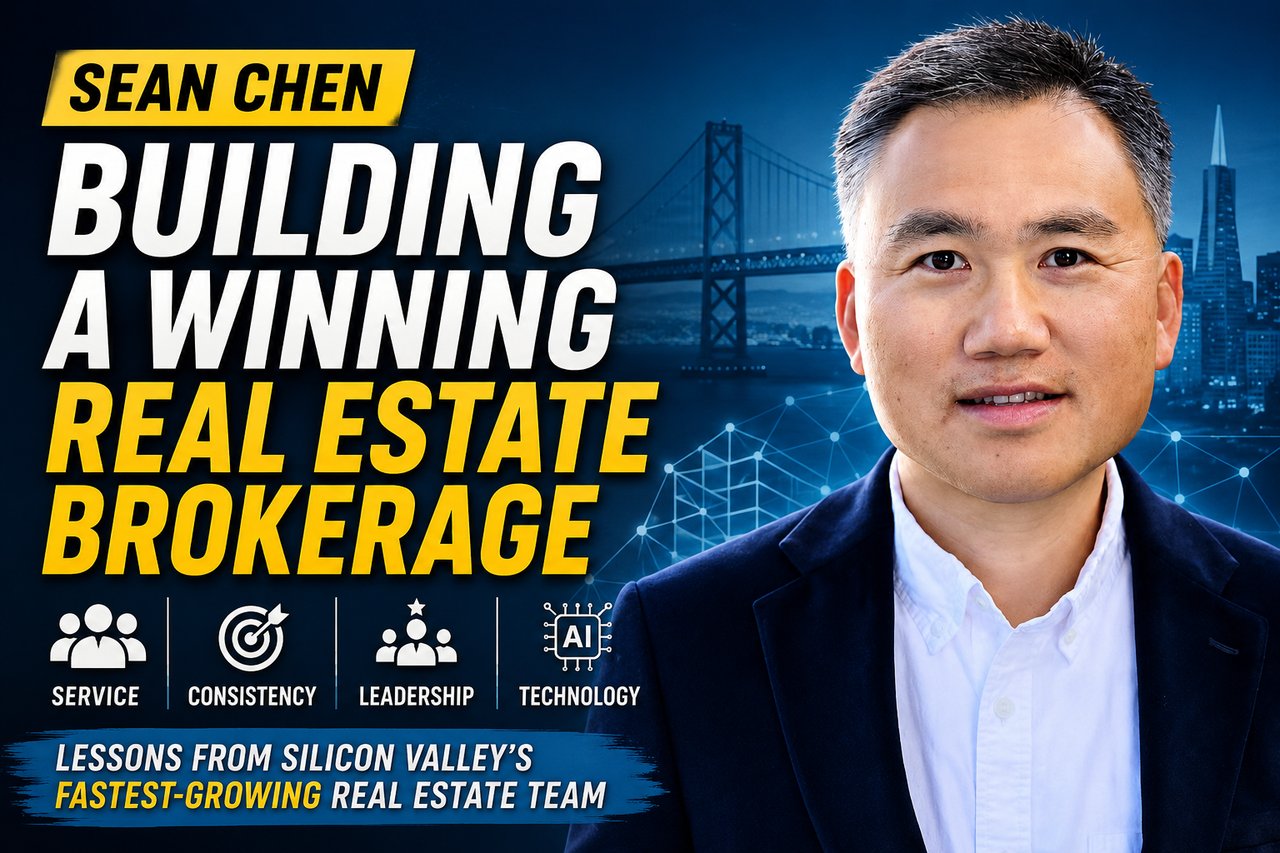
Service Before Sales: How Sean Chen Is Building a High-Performance Bay Area Real Estate Brokerage
Agent Growth August 12, 2026
Agent Growth August 12, 2026
Silicon Valley is one of the most demanding real estate markets in the country. Clients are sophisticated, information is everywhere, competition is intense, and every transaction carries significant financial and emotional weight.
In that environment, success requires more than persuasive salesmanship. It requires the ability to listen, solve problems, communicate clearly, and deliver value consistently.
That is the central message of Sean Chen’s conversation with Bruce Bean on SF Commercial Property Conversations. Chen, the founder of GAEA Realty, explains how a service-first philosophy, disciplined daily habits, individualized agent coaching, and the strategic use of artificial intelligence are helping his team build a strong presence throughout Silicon Valley and the greater Bay Area.
This, follows Chen’s unconventional journey from China to New York, where he studied medicine at NYU, and then into entrepreneurship, technology, and ultimately Bay Area real estate. It also examines how his leadership team is growing what the program describes as one of Silicon Valley’s fastest-growing real estate teams.
Sean Chen did not begin his professional life with a traditional plan to become a real estate broker.
Originally from China, he came to the United States and studied medicine at NYU. His career later took him into entrepreneurship and the technology industry before he found his way into real estate.
Although those fields may appear unrelated, each one contributed something useful to his eventual career.
Medicine emphasizes careful diagnosis, responsibility, and communication. Entrepreneurship requires resilience and comfort with uncertainty. Technology encourages professionals to examine systems, use data, and search continuously for more efficient ways of working.
Those same abilities are valuable in Bay Area real estate. Buyers and sellers frequently encounter complicated market data, inspections, disclosures, financing decisions, negotiations, and rapidly changing circumstances. An effective agent must do more than provide information. The agent must help the client understand what that information means and how it should influence a decision.
Chen’s professional journey illustrates an important lesson for anyone entering the industry: a nontraditional background is not necessarily a disadvantage. Experience from another field can become a differentiator when it helps an agent understand people, communicate more effectively, or solve problems in a new way.
One of Chen’s most important ideas is also one of the simplest: real estate is fundamentally a service business—not a sales business.
The distinction matters.
A sales-first professional may focus primarily on persuading someone to make a decision. A service-first professional begins by asking different questions:
What is the client actually trying to accomplish?
What information is missing?
What risks need to be explained?
What would make this process less stressful?
How can the client make a confident decision, even when the answer is not immediately obvious?
For a Bay Area buyer, service might mean explaining why two seemingly similar homes have very different long-term implications. It could involve reviewing disclosures carefully, identifying potential resale considerations, or helping the buyer avoid competing aggressively for a property that does not support the buyer’s goals.
For a seller, service could mean developing a thoughtful preparation strategy, determining which improvements are likely to matter, communicating clearly during a stressful transition, and presenting the property in a way that connects with the right audience.
GAEA Realty’s public description of Chen reflects the same philosophy. It identifies honesty, committed advocacy, and constant communication as the pillars of his client relationships and describes his approach as putting the client’s needs first.
When agents consistently operate this way, a transaction becomes more than a commission opportunity. It becomes a chance to earn long-term trust.
Service alone does not build a sustainable brokerage. Agents also need the discipline to create opportunities consistently.
During the conversation, Chen emphasizes daily prospecting as an essential part of long-term success.
Prospecting is sometimes misunderstood as aggressive cold calling or repeatedly asking people whether they are ready to buy or sell. A service-oriented approach looks different. Prospecting becomes the regular practice of starting and maintaining useful conversations.
In practice, that might include:
The objective is not to pressure people into action. It is to remain present, informed, and helpful.
This is especially important in the Bay Area, where clients may spend months or even years preparing for a purchase, sale, relocation, or investment. The agent who offers useful guidance throughout that period is far more likely to be remembered when the client is finally ready.
Motivation naturally rises and falls. A repeatable daily system protects an agent from depending on motivation alone. One productive conversation may not produce an immediate transaction, but hundreds of useful conversations can create a powerful network of relationships, referrals, and future opportunities.
New real estate agents frequently face the same dilemma: clients want experience, but an agent cannot gain experience without first attracting clients.
Chen’s advice points toward a practical solution. Instead of trying to overcome inexperience with traditional sales tactics, new agents can become valuable.
That begins with learning the local market deeply. A new agent may not have completed hundreds of transactions, but the agent can still become exceptionally prepared. They can study individual neighborhoods, review recent transactions, attend open houses, understand common property conditions, learn how different offer terms affect risk, and become familiar with the concerns buyers and sellers raise most often.
Preparation must then be converted into something useful for the client.
Rather than sending a generic message asking whether someone is ready to move, an agent can provide a relevant observation. Instead of forwarding raw market statistics, the agent can explain what those statistics may mean for that person’s circumstances. Instead of promising “great service,” the agent can demonstrate service through responsiveness, preparation, and follow-through.
The principle is straightforward:
Do not ask people to trust you before giving them a reason to do so.
Every interaction is an opportunity to build that reason.
Growing a successful real estate team requires more than recruiting agents and assigning production targets. It requires understanding what each person is trying to achieve.
Chen and Bean discuss the role of personalized coaching in helping agents reach their individual goals.
Not every agent joins a brokerage for the same reason. One may want to become a major producer and build a large book of business. Another may be developing a second career. A newer agent may need confidence, structure, and practical transaction experience. An established professional may need better systems and stronger leverage rather than more leads.
Effective coaching starts by identifying the agent’s destination. The leader can then work backward and translate that objective into specific weekly and daily behaviors.
This makes accountability more meaningful. An activity target is no longer an arbitrary demand from management. It becomes part of a plan connected to the agent’s own ambitions.
GAEA Realty’s public team information reflects a layered organization that includes founders, broker associates, team leads, senior consultants, and individual real estate professionals. The company describes its culture as one that values relationships alongside results and combines personalized service with innovative strategies.
The broader leadership lesson is that a high-performance team is not created by turning every agent into the same kind of producer. It is created by helping different people develop the habits, skills, and systems required to perform at their individual best.
Rapid expansion can create as many problems as it solves.
When a real estate team grows, clients may receive inconsistent communication. Agents may follow different processes. Important details may depend too heavily on one experienced leader. Without a strong operating culture, adding more people can dilute the qualities that originally made the company successful.
That is why brokerage growth should not be measured only by headcount or transaction volume. Sustainable growth means making a high standard of service repeatable.
The explores the development of GAEA Realty, the thinking behind the company’s name, and the leadership principles supporting its expansion.
For clients, a brokerage’s name eventually represents a promise. It tells them what kind of communication, preparation, judgment, and care they should expect regardless of which team member assists them.
Maintaining that promise requires clear standards, effective training, accessible leadership, and systems that make it easier for agents to do excellent work.
Technology is another major component of Chen’s strategy.
He explains that GAEA Realty’s leadership team is incorporating artificial intelligence into many parts of the brokerage, including client presentations, comparative market analyses, listing preparation, and agent productivity.
Used responsibly, AI can reduce the time agents spend on repetitive preparation. It can help organize information, develop preliminary presentation materials, summarize complex inputs, create first drafts, and make internal workflows more consistent.
However, the greatest opportunity is not simply producing more content. It is creating more time for meaningful human work.
An agent who spends less time formatting documents can spend more time studying a property’s competitive position. A team that streamlines listing preparation can devote more attention to strategy and quality control. A professional who begins with an AI-assisted draft can invest more energy in adapting the material to the client’s specific questions.
The most effective model is therefore not artificial intelligence replacing the real estate professional. It is artificial intelligence supporting a better-prepared, more responsive professional.
Agents remain responsible for checking the accuracy of information, applying local judgment, understanding the client’s circumstances, protecting confidential information, and explaining the reasoning behind a recommendation. Technology may accelerate the process, but trust still depends on the person guiding it.
In a service-first brokerage, efficiency is valuable because it gives agents more capacity to listen, advise, negotiate, and care for their clients.
The conversation offers useful lessons not only for agents and brokerage owners but also for consumers choosing someone to represent them.
A strong Bay Area real estate professional should be able to do more than unlock a property, distribute marketing materials, or repeat information found online. Buyers and sellers should look for an adviser who can:
The right question is not simply, “How many homes has this agent sold?”
Clients should also ask, “How will this person help me make better decisions?”
Sean Chen’s story demonstrates that there is no single conventional route to success in real estate.
A medical education, entrepreneurial experience, exposure to the technology industry, and a commitment to continuous improvement all contributed to the way he now approaches brokerage leadership.
But the principles behind the growth of GAEA Realty are not complicated:
Service earns trust.
Consistency creates opportunity.
Personalized leadership develops stronger agents.
Technology creates leverage.
The difficult part is practicing those principles every day.
Silicon Valley may reward innovation, but real estate remains deeply human. Buyers and sellers want clarity when decisions become complicated, advocacy when the stakes are high, and reliable communication when uncertainty creates stress.
The brokerage that combines those human qualities with disciplined systems and intelligent technology will be positioned to grow without losing what matters most.
That may be the most important lesson from Chen’s conversation with Bruce Bean: the future of Bay Area real estate will not belong merely to the teams with the most advanced technology or the loudest marketing. It will belong to professionals who use every available tool to serve people better.
Stay up to date on the latest real estate trends.

Success Stories
Gaea Realty Founder Sean Chen shares expert insights with KeyCrew Journal on Bay Area starter homes, AI hiring, Silicon Valley real estate, and future housing demand.

GAEA Policy/SOP
Why Independent Inspections and Due Diligence Matter in Real Estate
Agent Growth
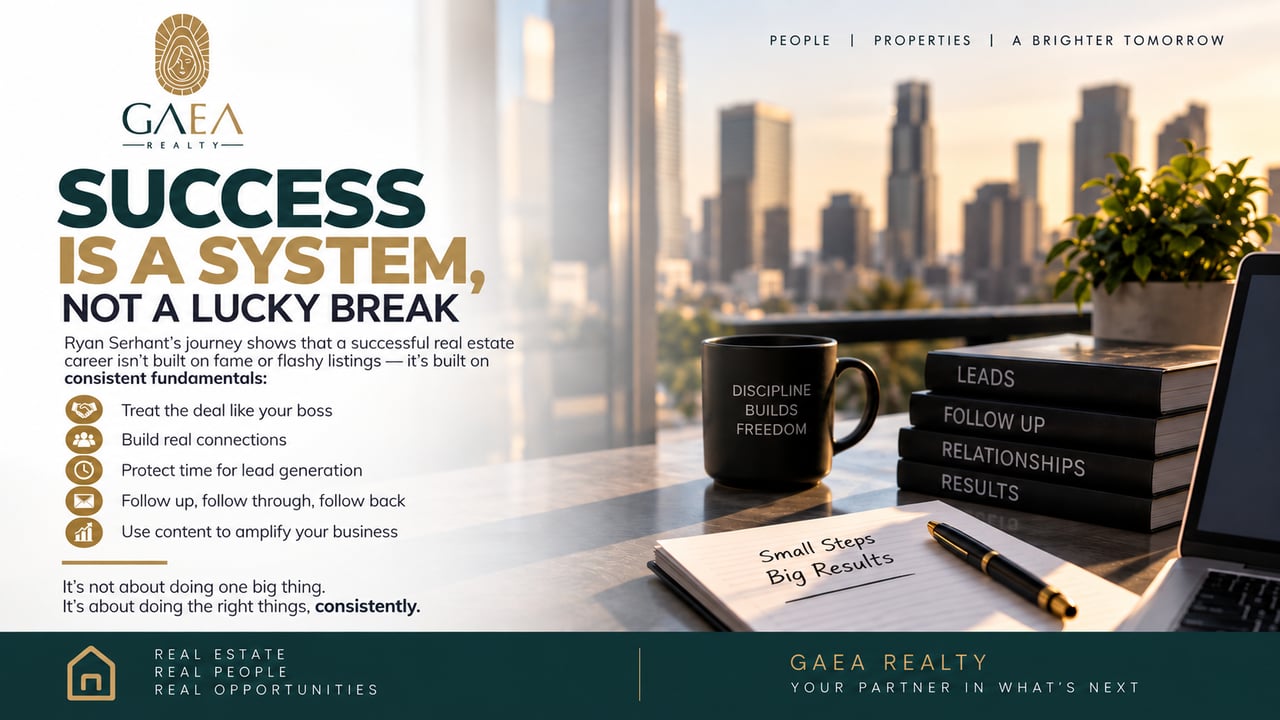
Ryan Serhant’s Real Estate Blueprint: Fundamentals of Success
Agent Growth
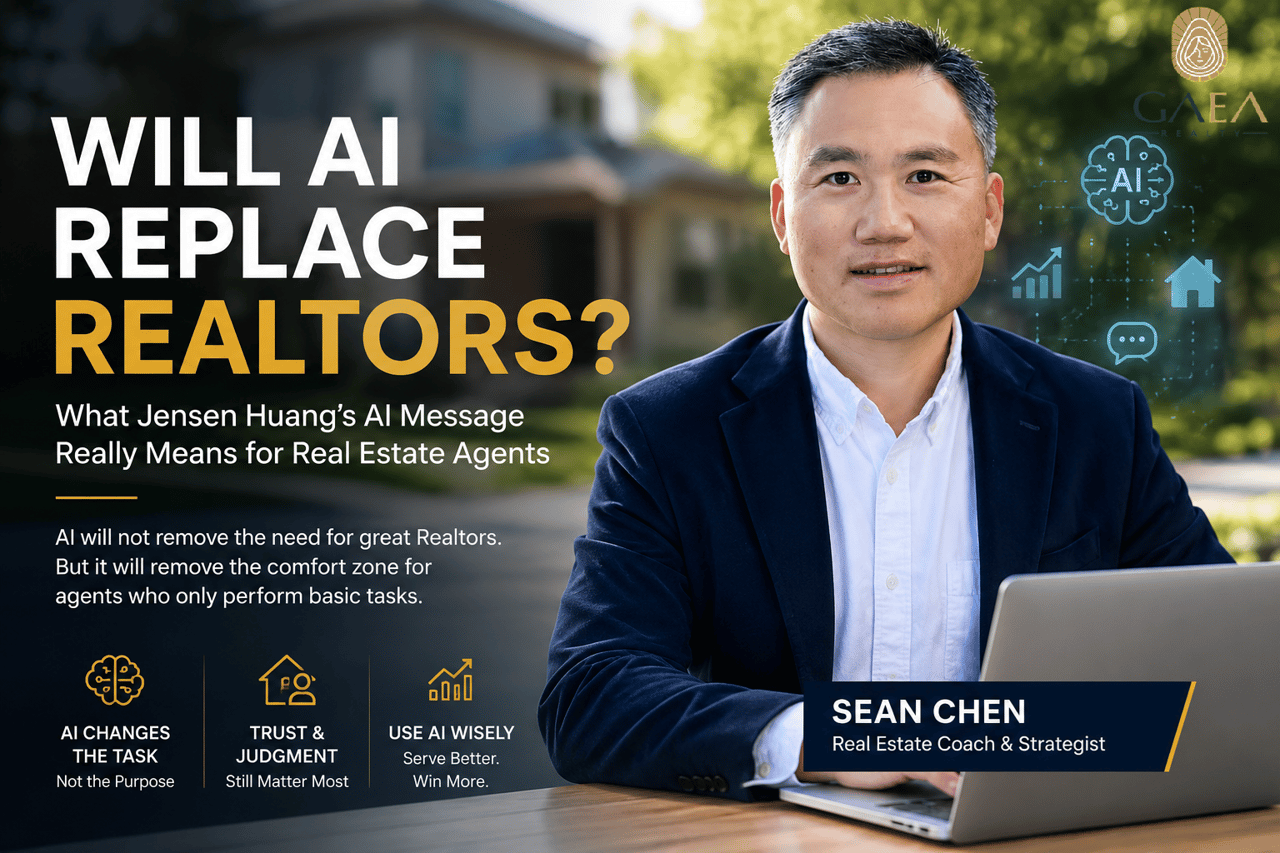
Sean Chen on Building a Successful Bay Area Real Estate Brokerage
Agent Growth
“When information becomes abundant, interpretation becomes premium.”

Agent Growth
Why Homeowners Ignore Most Agents (And How Top Producers Break Through)

Agent Growth
Redefining Sales Through the Art of Inquiry

BayAreaReal Estate
8 Traits of Top Real Estate Agents Worth Studying
Real Estate Leadership
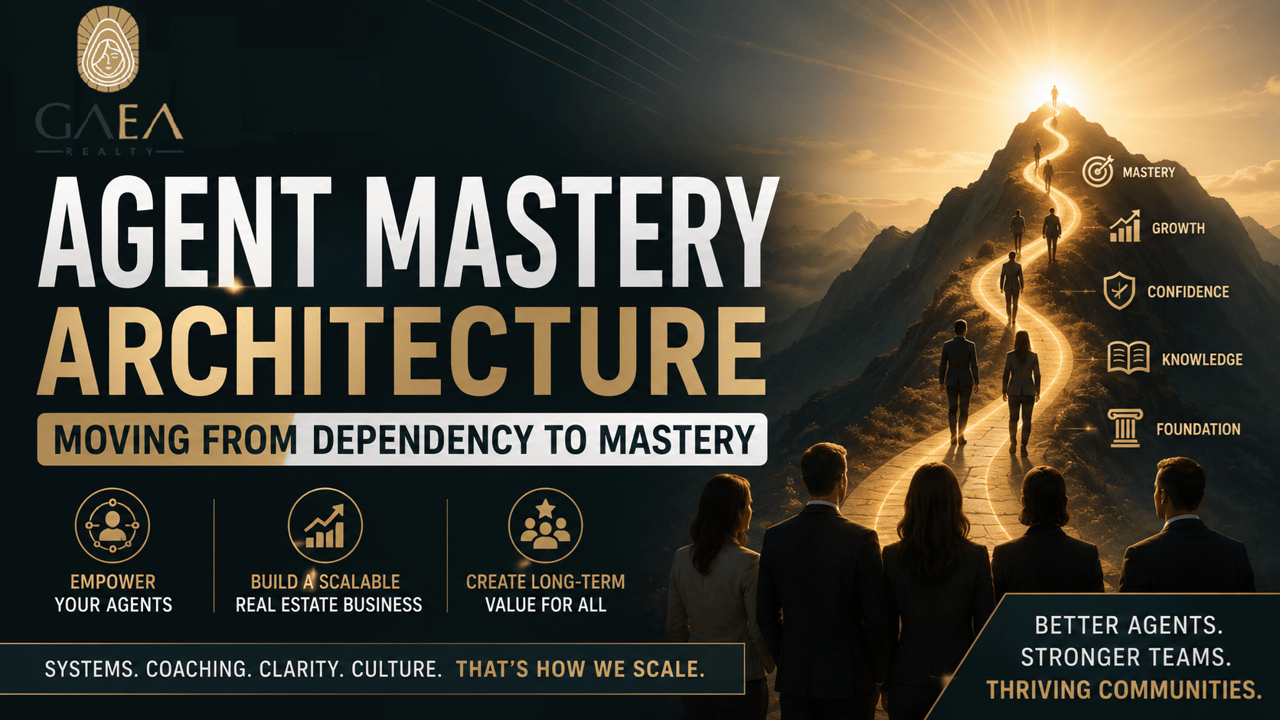
How top-producer dependency breaks teams, and how Gaea can build a teaching culture where everyone thrives